2030 World Cup: Demand for Authentic Moroccan Design Is About to Explode — Are Brands Ready?
Nearly $4 billion is being invested to expand Morocco's hotel capacity before 2030: behind the construction wave, another, less visible battle is playing out — the battle for visual identity. Between surface-level folklore and a genuine brand system, the choice is being made right now.
Upleo — Research Unit · September 1, 2026 · 5 min read
~4 Md$
in announced investment to expand Morocco's hotel capacity by roughly 20% by 2030
Source: Atalayar, April 2026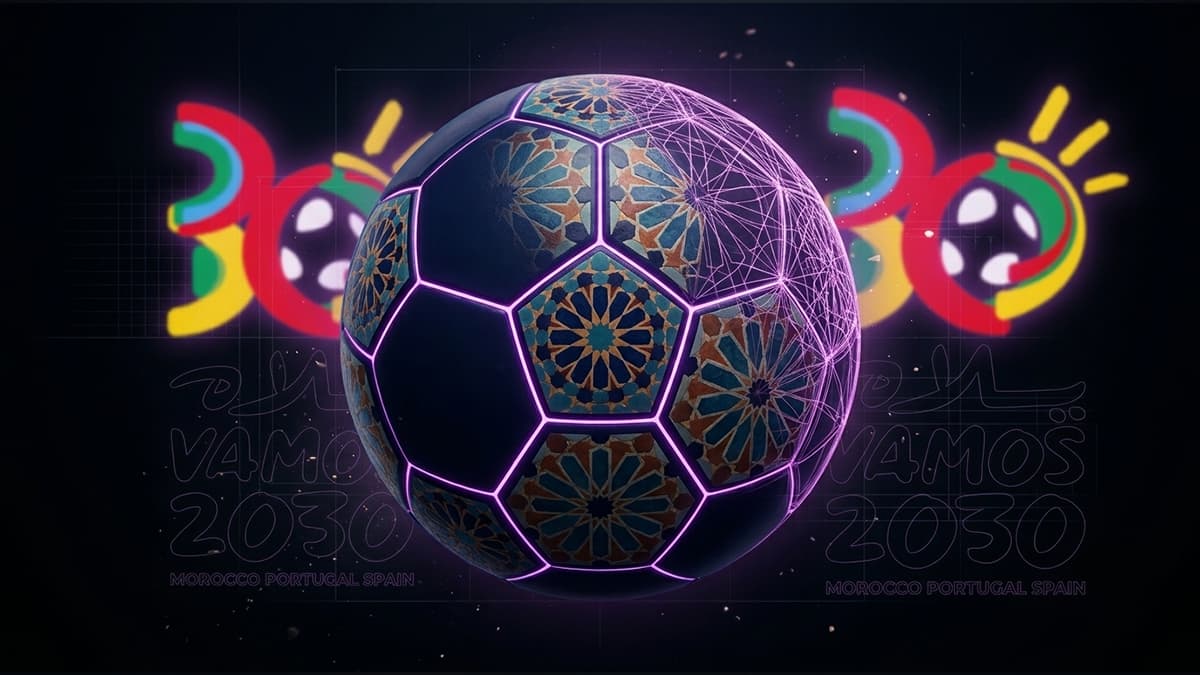
The signal
Morocco will co-host the 2030 World Cup alongside Spain and Portugal. To absorb the expected influx of visitors, the country has launched an investment plan estimated at around $4 billion aimed at expanding its hotel capacity by roughly 20%. The Minister of Tourism has also mentioned a target of 60,000 additional hotel beds by 2030, in a context where Morocco already welcomed a record 19.8 million tourists in 2025 (+14% year-on-year) and is targeting 26 million annual tourists by the end of the decade. Six Moroccan cities are currently candidates to host matches — including Casablanca, Rabat, Marrakech, Tangier, Agadir and Fez — each engaged in a race to modernize its hotel and sports infrastructure. The final list of host cities is due to be approved by the end of 2026, which means the most structuring investment decisions remain, at this stage, still to be confirmed city by city.
The context
This wave of hotel construction and urban development isn't just a concrete-and-steel undertaking: it's also, mechanically, a wave of commissions in interior design, visual identity and brand scenography. Every new hotel, every fan zone, every reception space will need an identity of its own — and the choice between surface-level decoration (zellige as wallpaper, Berber motifs as backdrop) and a genuine, coherent identity system will be made over this multi-year window, not at the last minute before 2030. This dynamic echoes a movement already under way in Morocco's creative economy: events such as Destination Créative Marrakech explicitly aim to accelerate the export of Moroccan creative talent and brands to international markets, with partnerships already forged with regional luxury players. The 2030 World Cup amplifies that same logic, but at an entirely different scale of visibility: for several weeks, the world's media and tourism attention will focus on how Morocco stages itself. What gives this issue real weight isn't just the scale of the construction wave: it's that the sector that stands to benefit from it — or be sidelined by it — already carries significant weight in the real economy. Moroccan crafts contribute around 7% of national GDP and support the livelihoods of nearly 22% of the active population, with more than 660,000 artisans registered in the National Crafts Registry. In 2025, craft exports reached a record level of around 1.23 billion dirhams. This is therefore not a minor decorative sector: it's an entire segment of Morocco's economy, strongly rooted in the regions (Fès-Meknès alone accounts for more than 144,000 specialized artisans), which stands to gain a great deal from a large, well-directed wave of commissions — and to lose a great deal from one that turns instead to generic, imported or industrialized decor. The nature of the projects already under way also illustrates the diversity of creative needs to come, well beyond tourist accommodation alone. In Rabat, a new 68,700-seat stadium has just been inaugurated. In Oujda, the construction of a 40,000-seat stadium is conceived as a development engine for the entire eastern region, with an ecosystem of hotels and services being built around it. In Casablanca, the future Grand Stade Hassan II is envisioned not as a one-off sporting venue but as a genuine integrated sports city, designed for year-round use and footfall — which means a brand identity built to last well beyond the 90 minutes of a match or the few weeks of the tournament.
The Upleo reading
For players in hospitality, tourism real estate and the institutions involved in hosting the World Cup, this sequence raises a fundamental question rarely asked out loud: will the rush to commission produce interchangeable decorative folklore, or a genuinely differentiating brand identity? The most concrete risk is that of last-minute commissioning. As the 2030 deadline approaches and the list of host cities is confirmed, demand for creative services (visual identity, signage, reception scenography) will concentrate into a narrow window, which mechanically pushes toward fast, generic solutions rather than substantive identity work. Establishments and institutions that start this reflection now — while the time window is still wide — have the opportunity to build a coherent brand system rooted in real heritage (crafts, zellige, regional know-how) rather than in a surface aesthetic slapped on under pressure. There is also an international perception issue that extends well beyond the tourism sector alone. During the competition, millions of visitors and television viewers will form an impression of Morocco based on what they see in hotels, fan zones and public spaces. For a Moroccan brand, whatever its sector, this window is a rare opportunity to calibrate its own identity in step with this moment — or to miss a visibility opportunity that won't come around again for a long time. The fourth point, less often discussed, touches directly on employment. With 22% of the active population engaged in crafts, the way procurement decision-makers — hotel groups, developers, public institutions — source their creative and decorative services has a real economic impact, not just an aesthetic one. A tender that systematically favors the cheapest, fastest solution (imported industrial production, imitation of traditional motifs with no link to an actual workshop) effectively shuts out several hundred thousand artisans from an unprecedented market opportunity, while ultimately producing a less differentiating visual identity for the brand itself. Conversely, specifications that explicitly build in sourcing from registered m'aalems and workshops turn the creative commission into a lever for regional economic development, on top of a mark of authenticity that's hard for international competitors to replicate.
Implications
- For hotel groups and developers working on new establishments before 2030: commission a coherent visual identity system now, while the time window is still wide, rather than waiting for the period of high creative pressure that will precede the event.
- For institutions and stakeholders involved in candidate cities: treat visual identity (fan zones, signage, reception) as a lever for international differentiation, not as a simple logistics box to tick.
- Track the official confirmation of the host city list at the end of 2026 before committing to the most structuring creative investments, to avoid betting on a city that ultimately isn't selected.
- Explicitly build sourcing from registered m'aalems and craft workshops into the specifications of World Cup-related projects — a choice that strengthens both the authenticity of the resulting identity and the regional economic impact, rather than relying on generic or imported decorative production.
Sources
- Morocco strengthens its hotel capacity ahead of the 2030 World Cup — Atalayar, April 2026
- 2030 Football World Cup: Morocco aims to add 60,000 hotel beds — RFI (via Yahoo News), July 2026
- Fez in intensive preparation mode ahead of FIFA's inspection visit — AllAfrica, September 2024
- Morocco: crafts employ 22% of the active population — Africa24 TV, May 2026
- Morocco inaugurates a new stadium in Rabat ahead of the 2030 World Cup — Soccerway, January 2026